Stillness as Growth: The Quiet Season Where Everything Changes
We’ve been taught to recognise growth by its movement. Progress looks like action, productivity, visible change. Growth is measured by milestones, outputs, and before-and-after comparisons that make transformation easy to point at and praise.
But nature tells a different story.
Some of the most profound growth happens underground. In the dark. In the pause between one season and the next. In moments that look, from the outside, like nothing at all.
There is a kind of stillness that only winter knows.
Not the forced stillness of stopping because you have no choice, but the natural stillness of life turning inward. Of sap retreating to the roots. Of soil resting beneath frost. Of the land exhaling after a year of becoming.
Winter does not ask to be productive. It does not rush to prove itself. It does not bloom on demand.
And yet, nothing about winter is stagnant.
Beneath the surface, life is quietly reorganising itself. Energy is being conserved. Structures are strengthening. Roots are deepening. Seeds are undergoing invisible transformations that make future growth possible.
This is the kind of stillness our bodies and souls recognise — even if our minds have been taught to resist it.
Stillness is not the absence of growth. It is one of its most potent forms.
Yet many of us struggle to trust it. When life slows, when momentum dissolves, when we feel called to stop pushing and start listening, an old discomfort rises. We wonder if we’re falling behind. If we should be doing more. If this quiet means something has gone wrong.
What if stillness is not a failure of growth, but an initiation into a deeper kind?
What if this pause is not a delay, but a recalibration — a necessary threshold that cannot be rushed or bypassed?
Stillness is not empty. It is full of information. It is where integration happens. It is where the nervous system softens enough to receive what has already been learned. It is where the body catches up with the soul.
And in a world that worships motion, choosing stillness becomes a radical act of trust.
To understand stillness as growth, we need to widen our definition of what growth actually is.
Growth is not just becoming more. Sometimes it is becoming truer. Sometimes it is releasing what no longer fits. Sometimes it is resting long enough to hear the quiet voice beneath the noise. Sometimes it is learning how to stay.
In seasonal living, stillness has a clear place. Winter does not apologise for its barrenness. The land does not rush to prove its worth. Roots deepen while the surface sleeps. Seeds lie dormant, gathering strength, undergoing invisible chemical changes that will later make blooming possible.
Nothing about this phase is wasted.
But because we live inside systems that do not honour cycles, many of us have learned to override our natural rhythms. We push through exhaustion. We fill every pause. We interpret rest as laziness and stillness as stagnation.
So when life invites us into a slower season — through burnout, transition, grief, illness, uncertainty, or simply a deep inner knowing — we resist. We try to make the stillness productive. We try to turn it into something useful. We rush to label it, optimise it, move through it as efficiently as possible.
But stillness cannot be forced to perform.
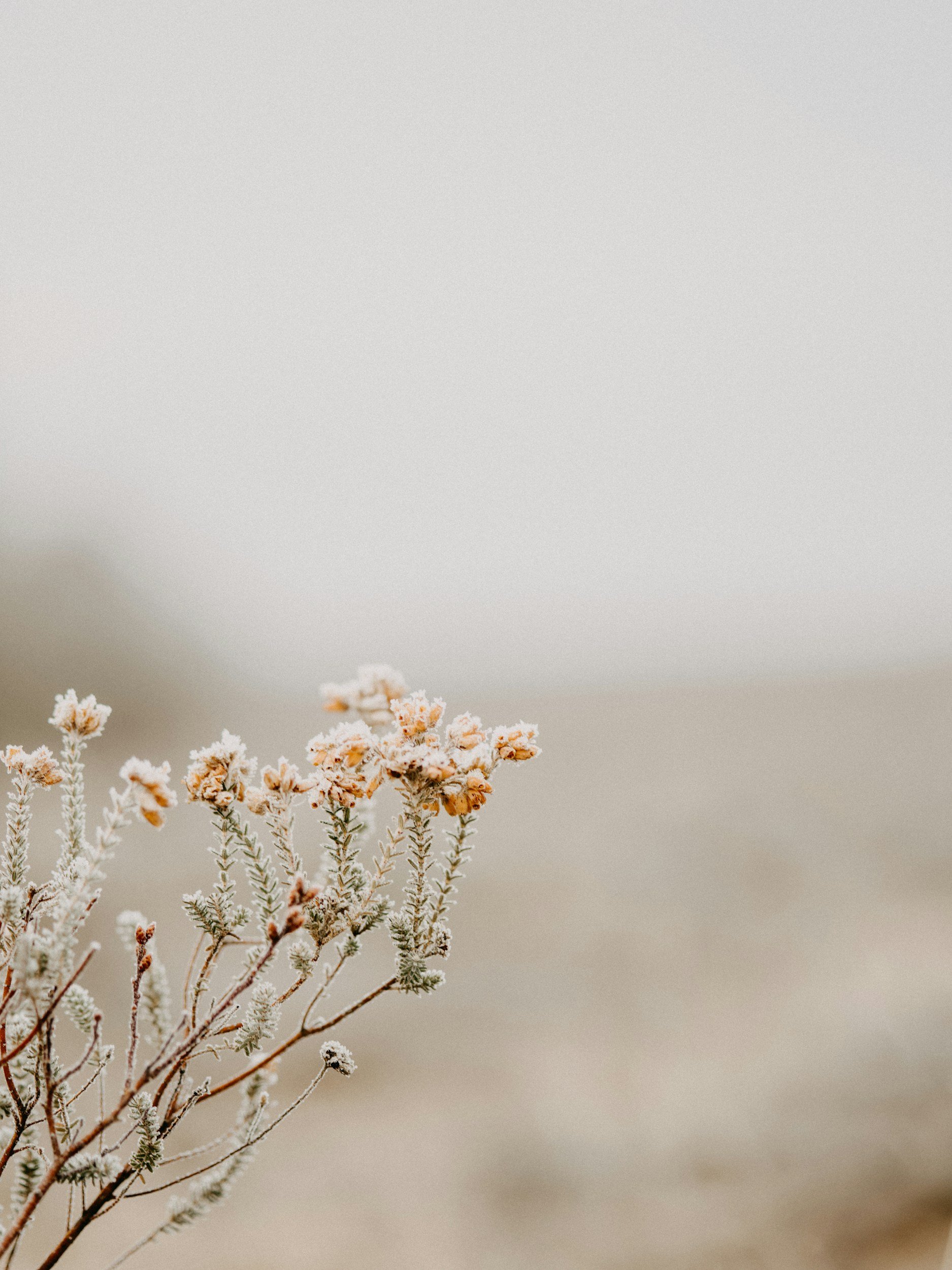
It asks to be met, not managed.
True stillness strips away our coping mechanisms. Without constant doing, we come face to face with ourselves. Our unmet needs. Our unprocessed emotions. The ways we’ve been surviving rather than living.
This is why stillness can feel uncomfortable, even frightening. It removes distraction. It asks us to feel what we’ve been avoiding. It invites us into a deeper intimacy with our own inner landscape.
And yet, this is where real growth begins.
Not the kind that looks impressive on the surface, but the kind that fundamentally changes how we relate to ourselves and the world.
Winter teaches us that growth does not always look like expansion. Sometimes it looks like contraction. Sometimes it looks like conservation. Sometimes it looks like being willing to sit in the quiet long enough for something deeper to take shape.
Stillness is not the absence of growth — it is growth happening in a different direction.
Internally rather than externally. Subtly rather than loudly. In ways that cannot be measured or displayed, only felt.
In seasonal living, winter is a time of listening. A time of slowing the nervous system, softening expectations, and allowing the body to lead rather than the mind. It is a season that asks us to release urgency and come back into relationship with time itself.
Not clock time. Lived time. Felt time.
Winter time stretches and deepens. Days feel thicker. Nights longer. The pace of life naturally slows, inviting reflection, integration, and rest. When we resist this rhythm, winter can feel heavy or oppressive. But when we move with it, it becomes deeply restorative.
This is where stillness reveals itself as a form of growth.
Because growth is not only about what we add to our lives. It is also about what we metabolise. What we compost. What we allow to settle into wisdom.
Winter is the season of digestion.
Emotionally, energetically, spiritually, we process the year that has been. Experiences that were too intense to fully feel at the time begin to surface. Grief, relief, clarity, exhaustion — all rise to be met when the external noise quietens.
This internal movement is easy to miss if we’re only looking for forward momentum.
But it is profound.
Much of our healing happens here, in the quiet moments when we are no longer distracted by doing. When we are no longer chasing the next thing. When we allow ourselves to simply be with what is.
This is why winter can feel confronting. Stillness removes our usual coping mechanisms. Without constant movement, we come face to face with ourselves — our needs, our limits, our truths.
And yet, this is exactly where growth becomes embodied.
Not performative growth. Not self-improvement as a project. But real, lived growth that changes how we relate to our bodies, our boundaries, and our inner world.
The lunar cycle mirrors this wisdom beautifully.
Each month, we are given a miniature winter — a dark moon phase where light disappears and the sky empties itself. The New Moon is often spoken about as a time of intention and new beginnings, but this is only possible because of the darkness that comes before it.
The Dark Moon — the days when the moon is invisible — is not a void. It is a gestational space.
Just as seeds germinate underground, our intentions begin forming in the dark. Before words. Before plans. Before clarity.
This phase is quiet, inward, and often uncomfortable for minds that crave certainty. There is nothing to see yet. Nothing to announce. Nothing to act on.
Only a sense of something stirring beneath the surface.
Stillness lives here too.
In the Dark Moon, energy drops. Sensitivity increases. Fatigue may surface. Emotions may feel closer to the skin. This is not a problem to solve — it is a signal to slow down.
The body knows this rhythm, even if our schedules do not.
Honouring the Dark Moon means allowing yourself to rest before you know what comes next. To pause without answers. To trust that not-knowing is part of the creative process.
Growth begins here — not with action, but with receptivity.
Just as winter prepares the land for spring, the Dark Moon prepares the psyche for renewal. Intentions planted without this stillness often remain superficial. They come from the mind rather than the body. From urgency rather than truth.
When we allow ourselves to truly rest in the dark, our desires become clearer. Our yeses and nos gain weight. Our next steps emerge organically rather than being forced.
This is internal growth at work.
It doesn’t announce itself. It doesn’t ask for validation. It doesn’t hurry.
It simply unfolds.
Stillness also recalibrates our relationship with effort.
In winter, nature does not waste energy. Everything is precise, economical, intentional. The body mirrors this instinct when we allow it to. We naturally want to do less, sleep more, simplify, and conserve.
This isn’t laziness — it’s wisdom.
Internal growth requires energy. Healing requires energy. Integration requires energy. When we push ourselves to keep producing through winter — physically or metaphorically — we drain the very resources needed for deeper transformation.
Stillness becomes the soil that protects new life from harsh conditions.
From a nervous system perspective, winter stillness is essential. Chronic busyness keeps us in a state of sympathetic activation — fight or flight. Growth that lasts requires safety. Safety is cultivated through slowness, predictability, and rest.
In stillness, the body learns that it is allowed to soften.
Only then can deeper layers of healing unfold.
This is why so many insights arrive in moments of quiet — on slow mornings, during winter walks, in the days before a New Moon, in the pause between one chapter and the next.
When we stop trying to change ourselves, something inside us reorganises naturally.
Stillness also invites honesty.
Without constant motion, we can no longer outrun misalignment. What feels wrong becomes clearer. What feels nourishing stands out. Winter has a way of stripping life back to its essentials.
What remains is what matters.
This clarity is not loud or dramatic. It is subtle. Felt. Lived.
And it shapes the choices we make when energy returns.
Because winter does end. The New Moon does wax. Movement does come back.
But what emerges from true stillness is different.
It is more rooted. More intentional. Less reactive.
Spring growth that follows a deep winter rest is resilient. It knows where its nourishment comes from. It is not fragile or frantic.
The same is true for us.
When we honour stillness — seasonal and lunar — we stop forcing premature growth. We allow ourselves to become ready rather than pretending we are.
This is not about withdrawing from life indefinitely. It is about trusting timing.
Stillness is a phase, not a destination.
But it is a phase that cannot be skipped without cost.
If you find yourself craving quiet right now, it may not be because you are unmotivated or stuck. It may be because you are in a winter moment — internally, energetically, or emotionally.
If you feel drawn to rest around the Dark Moon, to simplify, to turn inward, this is not something to push through. It is something to listen to.
Your growth is not on hold.
It is happening beneath the surface.
In ways that will only become visible later.
Stillness is where your roots are strengthening.
Where old patterns are dissolving.
Where truth is settling into the body.
Where the next cycle is quietly forming.
Winter teaches us that life does not grow by force.
The Moon teaches us that darkness is not an ending, but a beginning in disguise.
Stillness teaches us that becoming does not always look like movement.
Sometimes it looks like staying.
Sometimes it looks like resting.
Sometimes it looks like trusting the quiet work.
And when the light returns — as it always does — you will not be starting from nothing.
You will be emerging from depth.
Stillness was never the opposite of growth.
It was the place where growth learned who it truly was.
xo Emily