How I’m Preparing for Spring — Mind, Body and Soul
There’s something about the shift from winter into spring that doesn’t get spoken about enough.
On paper, this is meant to be the hopeful part. The moment we’ve been waiting for. Lighter mornings that arrive quietly at first, then more confidently. Tiny green shoots pushing through dark soil. The promise of momentum returning after months of stillness. A subtle loosening of the grip winter has held on us. We’re told this is when energy comes back online, when motivation returns, when life begins again.
But in the body — in the nervous system, in the emotional landscape, in the deeper layers that don’t respond to calendars or cultural narratives — this threshold can feel surprisingly uncomfortable.
After months of slowing down, turning inward, resting more deeply (whether we consciously allowed ourselves to or not), we are suddenly asked to stretch again. To respond. To re-engage with a world that is already speeding up. Energy begins to move again, but it doesn’t always do so smoothly. It can feel jangly, unsettled, fragile. For many of us, it feels overwhelming before it feels enlivening.(and that’s totally ok and normal).
Early spring holds a strange, liminal quality. We are no longer in the deep, cocooned stillness of winter, but we are not yet in the full, expressive, outward-facing energy of late spring either. There is movement, yes — but it is tentative. Careful. Sap rises slowly. Roots wake up long before leaves unfurl. Buds form invisibly before they dare to open.
Nature does not rush this part, even though the world around us often does.
This in-between season is a threshold. A crossing. A time when the system recalibrates — and recalibration is rarely comfortable. It requires adjustment. It asks the body to renegotiate how it holds energy, how it moves, how it responds to stimulation. It asks the nervous system to widen its window of tolerance again after a season of contraction. It asks the psyche to begin imagining forward without yet knowing what shape that future will take.
And so if you find yourself feeling restless but tired, hopeful but heavy, inspired but strangely resistant, you are not doing spring wrong. You are doing it honestly.
This is precisely why this period — the weeks before the Spring Equinox, before the official turning of the wheel on the 20th of March — is such an important time to prepare. Not to launch. Not to hustle. Not to “get back on track.” But to tend the ground so that growth, when it comes, feels sustainable rather than depleting.
Energetically, this season invites renewal, clarity, and forward motion. But it asks for preparation before action. It is about clearing, lightening, making space. It is about gently strengthening the systems that will support us as things inevitably speed up. It is about readiness — not the kind that demands perfection, but the kind that comes from listening, attuning, and responding with care.
For me, this period before spring is not about forcing myself into productivity or setting ambitious goals simply because the light has returned. It is about tending the soil of my life. About asking what needs to be softened, simplified, released, or gently reinforced so that when growth arrives, it feels aligned rather than overwhelming.
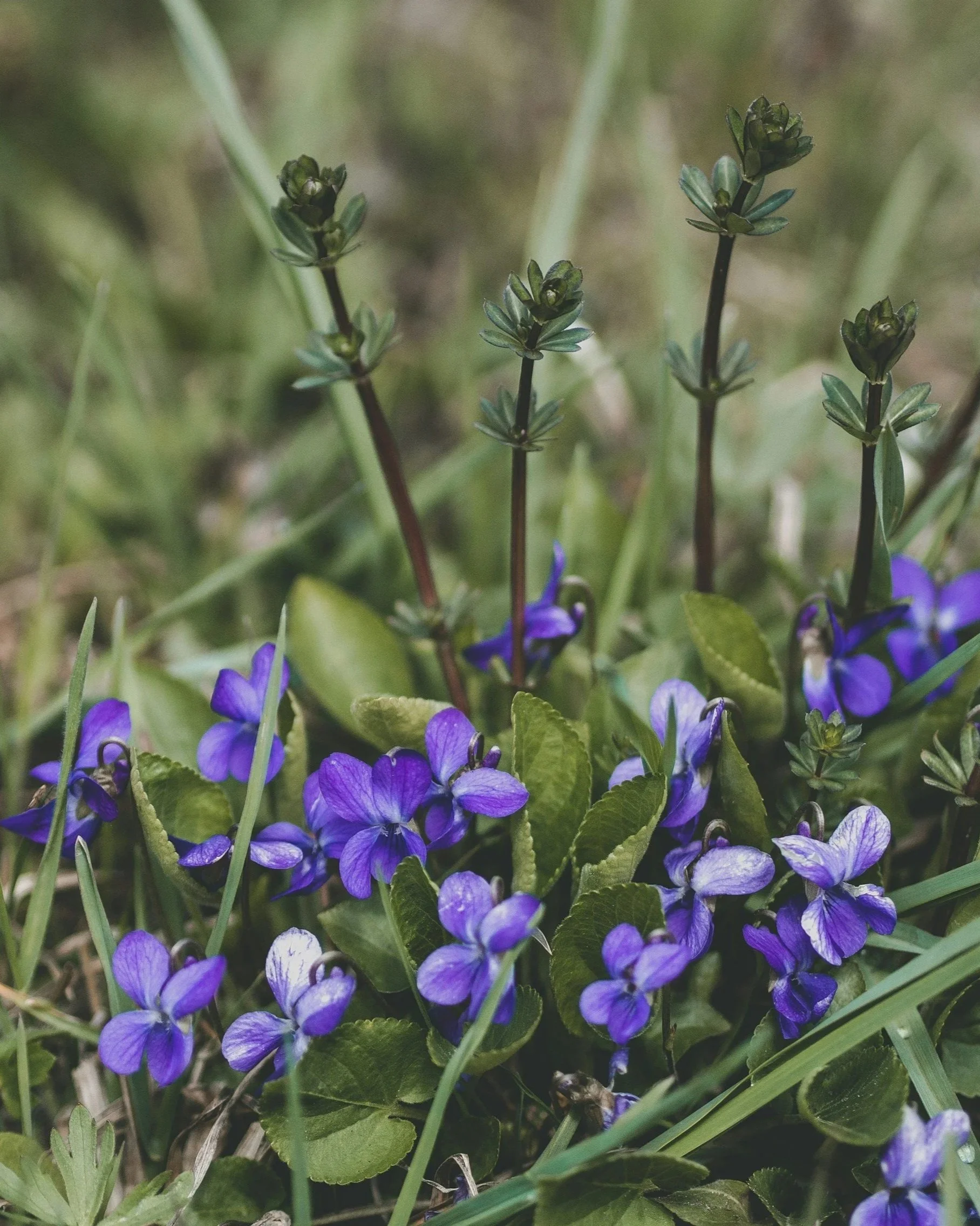
Spring will arrive whether we are ready or not. But how we meet it matters.
So I wanted to share some of the ways I’m preparing my mind, body, and emotional world for spring — not in a hustle-y, glow-up, reinvention-narrative kind of way, but in a quiet, intentional, rooted way. The kind of preparation that respects where we’ve been, honours the pace of the nervous system, and trusts that slow readiness creates deeper resilience.
Cleansing my environment
One of the first places I always feel this seasonal shift is in my physical environment.
Winter invites us to cocoon. To layer. To gather. To create nests within nests. Over the darker months, my home becomes a container for rest, for holding, for warmth. Blankets pile up. Corners become heavier. Light is softened, dimmed, filtered. Everything turns inward.
By the time early spring arrives, those same layers can begin to feel weighty. What once felt comforting can start to feel stagnant. And so, almost instinctively, I begin to reorganise my space.
Not in an aggressive, minimalist, “throw everything out” way. But in a softening way. A brightening way. A way that mirrors what is happening outside.
I move slowly through my home, noticing where energy feels stuck or compressed. I open curtains wider during the day and let light spill into places that have been shadowed for months. I shift furniture just enough that the room feels like it can breathe again. I put away the heaviest winter textures and bring out lighter fabrics, brighter ceramics, objects that reflect rather than absorb light.
This is not about aesthetic perfection. It’s about regulation.
There is something deeply calming to the nervous system about living in an environment that reflects the season you are moving into. When my space feels lighter, clearer, more permeable, my mind follows. Thinking becomes easier. Dreaming feels safer. There is more room for curiosity and imagination.
Our environments are not neutral. They constantly communicate with our bodies. They tell us whether it is safe to expand or whether we need to stay small. And when my home begins to echo early spring — still gentle, still contained, but subtly opening — my system receives the message that change is allowed to happen slowly.
Internal cleansing
Alongside this external clearing, I’ve been supporting my body’s internal transition.
Spring has long been associated with cleansing and renewal, particularly in herbal and traditional medicine systems. But I want to be clear about what that means here. This is not about punishment. Not about restriction. Not about “fixing” the body after winter.
It is about support.
I’ve been working with simple, familiar spring allies — nettle and cleavers tea most days — as a gentle ritual rather than a rigid protocol. These are plants that emerge early in the season for a reason. They support lymphatic movement, circulation, and energy flow at a time when the body is naturally beginning to wake up again.
As I often say, nature offers us exactly what we need, exactly when we need it.
Drinking these teas feels grounding and refreshing at the same time. A quiet way of signalling to my body that we are shifting gears, but we are doing so together. That there is no rush. That we can release what has accumulated over winter at a pace that feels kind.
There is also something deeply symbolic in this ritual. As I sip my tea, I find myself asking questions that go beyond the physical. What emotional residue from winter am I ready to let go of? What stories, patterns, or expectations no longer need to be carried forward? What feels heavy simply because it hasn’t been allowed to move?
Spring is a circulation season. Not everything needs to be purged. Some things simply need to flow again.
Reenergising Nutrition
My relationship with food shifts in much the same way.
Winter foods have held me through rest and repair. Warm, grounding, deeply nourishing meals that offered comfort and stability when energy was low and inwardness was necessary. I am deeply grateful for them.
As the light changes, I don’t abandon that nourishment. But I do begin to make space for freshness. More greens. Lighter lunches. Foods that feel alive rather than dense. Meals that leave me feeling energised rather than weighed down.
This is not about removing comfort. It is about balance.
Spring, for me, is about supporting energy rather than forcing it. Feeding my body in a way that helps me feel more awake, more clear-headed, more present — without tipping into depletion. Listening closely to what my digestion, energy levels, and mood are asking for rather than following a prescribed idea of what spring eating “should” look like.
There is a conversation happening between my body and the season. My job is to listen.
Movement, too, begins to change.
I find myself craving more time outdoors, even on days when it would be easier to stay inside. Morning light on my face. Short walks with no destination other than noticing what has shifted since yesterday. Standing in the garden, watching buds form almost imperceptibly, reminding myself that transformation is often invisible until it isn’t.
These moments are small, but they are powerful.
Time outside helps my nervous system recalibrate. It reminds my body what season we are in, not through thinking but through sensation. The quality of light. The temperature of the air. The sounds returning after winter quiet.
Being outside teaches me patience. Growth does not happen all at once. Consistency matters more than intensity. Showing up gently, again and again, is enough.
In my work, I feel this same pull toward preparation rather than performance.
There is a temptation in early spring to push forward too quickly. To make plans. To initiate projects. To capitalise on returning energy before it disappears again. I recognise that urge in myself — and I consciously choose to slow it down.
Instead of launching, I focus on laying groundwork. Tidying systems. Reviewing workflows. Simplifying where things have become overly complex. Making sure the structures that hold my work are steady, supportive, and aligned before I ask myself to expand.
This kind of work is quiet. Often invisible. Rarely celebrated.
But it is profoundly spring-aligned.
Roots first. Shoots later.
When foundations are solid, movement feels supportive rather than stressful. Growth feels exciting rather than precarious. And so I allow this season to be about strengthening what already exists rather than reaching for what is next.
Emotionally, this transition asks for just as much tenderness.
Spring stirs things. Hope and grief often rise together. There is excitement for what is ahead, and mourning for what is ending. For what winter held. For versions of ourselves that were necessary in the dark but may no longer fit as the light returns.
I give myself permission to feel all of it.
I journal more during this time, not to analyse or problem-solve, but to listen. I check in with my body. I notice where resistance shows up, where fatigue lingers, where excitement feels genuine and where it feels pressured. I let these signals inform my pace rather than overriding them.
I also review my intentions gently. Not rewriting my entire life plan. Not demanding clarity before it arrives. Simply asking simple, honest questions.
What do I want more of as the days grow longer? What do I want less of? What pace actually feels good in my body right now?
And then I trust the answers to evolve.
Around the edges of all this, there are dozens of small, almost imperceptible shifts. Opening windows whenever I can, even if the air is still cold. Refreshing my altar with early spring finds. Changing playlists to sounds that feel lighter, softer, more spacious. Letting mornings become a little earlier and more energetic, while allowing evenings to retain their slowness.
None of these things are dramatic. But together, they create a sense of coherence. A feeling that my life is gently aligning with the season rather than fighting against it.
Spring does not need us to be ready overnight.
It asks for willingness. For presence. For care.
It invites us to prepare thoughtfully. To listen closely. To trust that energy will build in its own time if we support it well.
If you are finding this transition difficult, you are not behind. You are not failing at seasonal living. You are not broken.
You are simply in the tender middle — the place where things are waking up but not yet in full bloom.
May you give yourself permission to move slowly into the light.
And may the ground you are tending now hold you beautifully when growth begins to rise.
xo Emily