How I’m Celebrating Imbolc (& the Magic, Meaning, and Energy of This Quiet Turning)
Imbolc has always felt like a whisper rather than a shout.
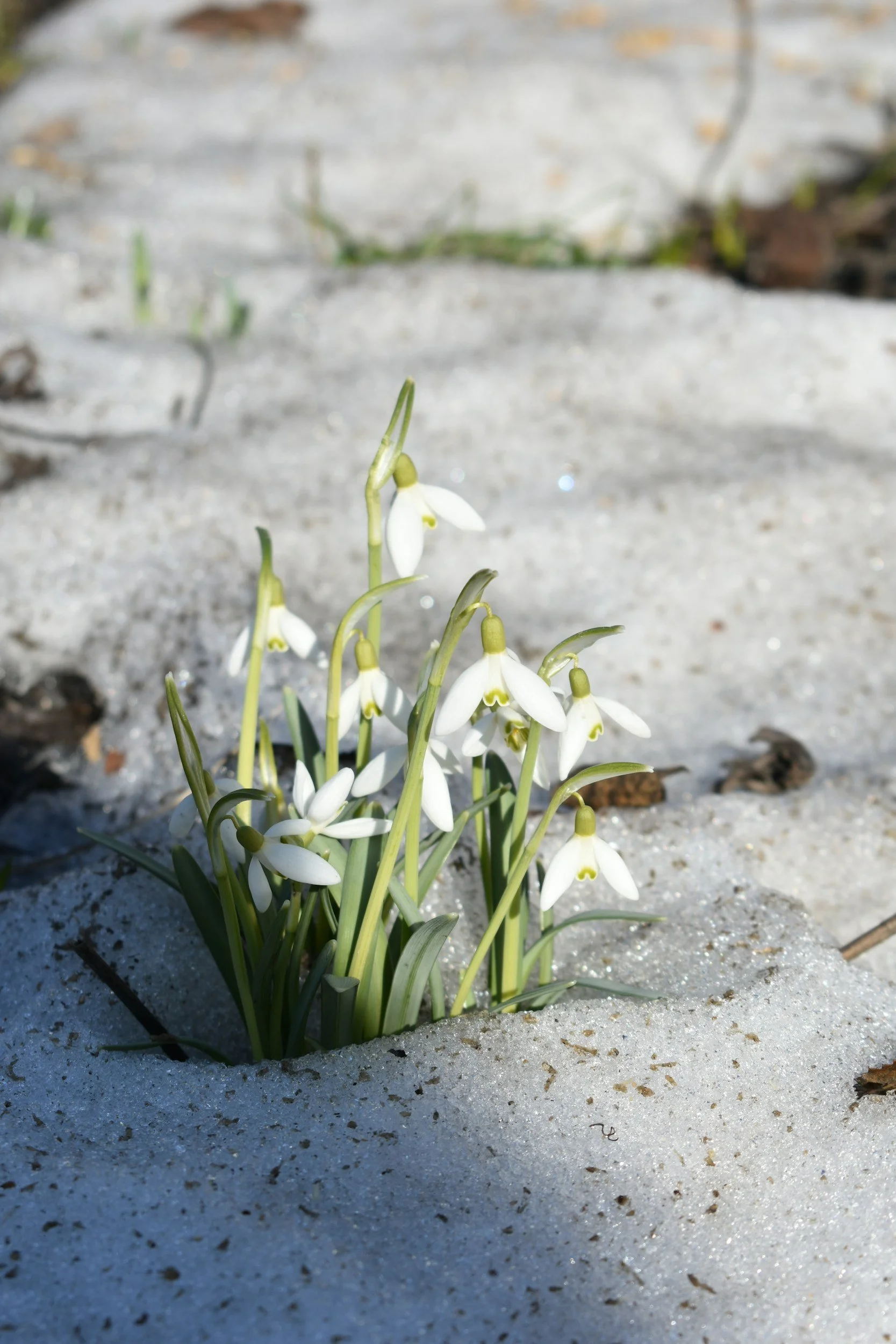
It arrives quietly, without fanfare, tucked into the heart of winter when the world still looks asleep and the cold still lingers in our bones. There are no obvious signs of spring yet. No sudden greening. No dramatic shift. And yet, something has changed. Something has turned. Something deep beneath the surface has begun to stir.
This is why I love Imbolc so much. It asks us to pay attention to what’s subtle. To honour beginnings that don’t yet look like beginnings. To trust life before it proves itself.
Imbolc marks the midpoint between the Winter Solstice and the Spring Equinox. We’ve moved past the deepest darkness, but we are not yet in the light. We are in the in-between space — the liminal threshold where the seeds that were planted in the dark are quietly warming, softening, and preparing to break open.
For me, Imbolc is not about doing more. It’s not about pushing ahead or forcing clarity. It’s about tending. Listening. Making space. And learning how to care for what is emerging — both within myself and in my life — without rushing it into bloom.
The ancient roots of Imbolc
Traditionally, Imbolc is a Celtic festival dedicated to Brigid — goddess of fire, fertility, healing, poetry, and the hearth. It is a celebration of light returning, of milk flowing again in the ewes, of nourishment beginning to reappear after the long lean months of winter.
The word Imbolc is often linked to the Old Irish i mbolg, meaning “in the belly.” Life is stirring in the womb of the earth. Potential is forming. Creation is underway, even if it cannot yet be seen.
This has always felt deeply resonant to me. Imbolc reminds us that growth doesn’t begin when things are visible. It begins long before that — in the unseen places, in the quiet inner shifts, in the gentle decisions to stay present and keep tending what matters.
Energetically, Imbolc carries a blend of winter’s inwardness and spring’s promise. It is both soft and potent. A time of purification and renewal, yes — but not in the sharp, decluttering way that modern culture often pushes at the start of the year. This is a slower kind of renewal. One rooted in care, compassion, and patience.
The energy of Imbolc: tending the inner flame
If the Winter Solstice is about lighting the flame, Imbolc is about learning how to keep it alive.
This is not the roaring fire of summer creativity or outward expression. It’s the hearth fire. The candle flame. The steady warmth that sustains rather than dazzles. Imbolc teaches us about devotion — to our inner light, to our healing, to the quiet truths that are beginning to surface.
I often feel Imbolc as a soft but insistent nudge. A sense that something is asking for my attention, even if I can’t quite name it yet. There’s a gentle restlessness in the air, but it doesn’t want action as much as it wants honesty.
What feels alive?
What feels fragile?
What needs warmth, nourishment, or protection right now?
These questions tend to float up naturally for me at this time of year. Not as pressure, but as invitations.
Imbolc is deeply connected to themes of purification, but again — not in a harsh or self-punishing way. It’s about clearing what no longer feels aligned so that energy can flow more freely. About releasing heaviness, old stories, and outdated identities that we no longer need to carry into the coming cycle.
There’s also a strong healing current here. Brigid’s energy is woven through Imbolc — reminding us that healing is not linear, and that tending to our inner fire requires gentleness as much as courage.
How I’m personally celebrating Imbolc this year
My Imbolc celebrations are never big or elaborate. They are quiet, intimate, and deeply personal. This year especially, I’m feeling called to keep things simple — to honour where I truly am, rather than where I think I should be.
I’m noticing that this Imbolc arrives after a winter that has asked a lot of my nervous system. A season of deep feeling, reflection, and recalibration. So instead of pushing for clarity or new plans, I’m choosing to focus on restoration and reconnection.
One of the main ways I’m celebrating Imbolc this year is by tending my home as a sacred space. Not in a frantic cleaning sense, but in a way that feels reverent. Opening windows on brighter days. Letting fresh air move through the rooms. Clearing small pockets of stagnation rather than overhauling everything at once.
I’ve been drawn to lighting candles in the early mornings and evenings — small rituals that mark the day and anchor me back into my body. Fire feels especially meaningful at this time of year. It’s a reminder that warmth and light are returning, even if the days are still cold and short.
I’m also spending more time with my plants again. Winter often pulls me away from active tending, but Imbolc feels like a gentle re-entry. Checking in. Watering where needed. Pruning what’s finished. It mirrors what I’m doing internally — noticing what needs care and what can be let go of.
Another way I’m honouring Imbolc is through journalling, but not in a goal-setting or future-focused way. My reflections are centred on the present moment.
What has winter taught me so far?
What parts of myself feel tired, and what parts feel quietly hopeful?
What am I ready to release before spring arrives?
These aren’t questions I rush to answer. I let them sit. I return to them over cups of tea, over slow mornings, over moments when something clicks unexpectedly.
Imbolc as a bridge, not a beginning
One of the biggest misconceptions about Imbolc is treating it like a “fresh start.” While it is a moment of renewal, it’s more accurate to see it as a bridge — a transition point rather than a starting line.
Imbolc doesn’t ask us to leap forward. It asks us to pause, check in, and adjust our footing before continuing on.
This feels especially important in a culture that constantly urges us to be ahead of ourselves. To plan, produce, and optimise. Imbolc offers a different rhythm — one that values presence over productivity and care over speed.
For me, this means not forcing decisions that aren’t ready yet. Not demanding clarity before it naturally arrives. Trusting that the seeds I planted earlier in winter are still working things out beneath the surface.
There’s a deep wisdom in this. Nature doesn’t rush her processes, even when we want answers. She trusts timing. Imbolc teaches us to do the same.
Working with the body at Imbolc
Imbolc is also a powerful time to listen to the body. After months of cold and contraction, the body often begins to crave movement again — but not intense or demanding movement. Gentle stretching. Slow walks. Reintroducing lightness gradually.
I’ve been paying attention to what nourishment looks like for me right now. Warmer foods still feel essential, but there’s a subtle shift toward freshness. Lighter soups. Herbal infusions that support circulation and cleansing. It’s as though my body is saying, “I’m not ready for spring yet, but I can feel it coming.”
Rest remains important at Imbolc. The temptation is to emerge too quickly, but this is still winter. Honouring that prevents burnout later on. I see Imbolc as a checkpoint — a moment to ask whether my energy is being spent wisely, and whether my pace is sustainable.
The deeper spiritual meaning of Imbolc
On a soul level, Imbolc is about remembering your inner authority.
Brigid’s energy invites us to reconnect with our creative fire — not as something to perform or share immediately, but as something to nurture. This is a potent time for reconnecting with intuition, inspiration, and inner truth.
There’s often a renewed sense of purpose at Imbolc, but it arrives quietly. A feeling rather than a plan. A knowing rather than a strategy.
Spiritually, this is a time to ask:
What feels sacred to me now?
What deserves my devotion in this next cycle?
Where am I being called to show up with more presence and care?
These questions don’t need immediate answers. Their power lies in allowing them to reshape how we relate to ourselves and our lives.
Carrying Imbolc forward
Imbolc doesn’t end when the day passes. Its energy weaves through the weeks that follow, slowly building toward the Spring Equinox. What we tend now influences how we arrive in spring.
I like to think of Imbolc as a promise — not of immediate change, but of continuity. A reminder that even when growth feels slow, it is still happening.
As I move forward from Imbolc, I’m carrying a commitment to gentleness. To tending my inner flame rather than exhausting it. To honouring where I am, rather than striving to be somewhere else.
This is the magic of Imbolc for me. It teaches me that beginnings don’t need to be loud to be powerful. That care is a form of devotion. And that trusting the unseen is often the bravest thing we can do.
In a world that celebrates bloom and expansion above all else, Imbolc reminds us that the quiet work matters too. The warming of the soil. The softening of the seed. The patient tending of life before it shows its face.
And so I meet this Imbolc not with grand intentions, but with open hands. A listening heart. And a steady flame — glowing quietly, faithfully, within.
xo Emily