Eating Seasonally for Winter : Nourishment, Stillness, and Strength
Winter asks us to pause.
To breathe deeply, to rest, and to return to the roots of what sustains us.
As the last leaves fall and the world grows quiet under frost and cloud, nature draws inward — conserving energy, storing strength, and tending to the unseen.
We are invited to do the same.
To eat seasonally in winter is to honour that inward pull. It’s to choose foods that nourish us deeply, restore our reserves, and keep our inner flame burning through the darkest months of the year. It’s to remember that nourishment isn’t only physical — it’s also emotional, energetic, and spiritual.
Winter is a time to slow cook, to sip slowly, to savour simplicity.
It’s a time to eat for warmth, immunity, and grounding — and to find comfort in the gentle rituals of the kitchen.
The Energy of Winter
In nature, winter is the great exhale — the still point between cycles. The trees stand bare, the animals hibernate, and the soil rests.
Everything in the natural world conserves energy, gathering strength for the coming spring.

Energetically, winter aligns with the Water element in Traditional Chinese Medicine — representing stillness, depth, and wisdom. It’s associated with the kidneys and bladder, which govern vitality, willpower, and the body’s store of energy.
When we live in alignment with this rhythm, we give ourselves permission to rest and replenish. We stop pushing and start listening. We tend to our inner world — through warmth, nourishment, and reflection.
Winter’s medicine is simple: stillness, warmth, and depth.
What the Body Needs in Winter
As temperatures drop and daylight fades, the body naturally slows down.
Digestion becomes weaker, circulation slower, and our need for warmth and calories increases. We’re drawn to comforting meals, rich flavours, and foods that sustain energy over long hours.
This isn’t indulgence — it’s instinct. Nature provides exactly what we need.
Here’s what supports your body most deeply in winter:
1.Warming, Cooked Foods
Winter calls for food that warms you from the inside out. Long, slow cooking methods — roasting, baking, simmering, stewing — create meals that are grounding and easy to digest.
Opt for Soups, stews, broths, porridges, root bakes, and teas infused with warming spices.
Avoid: Excessively raw or chilled foods, which can weaken digestion and sap energy.
2.Mineral-Rich and Strengthening Foods
Winter’s stillness is about replenishing the body’s foundation — the bones, kidneys, and adrenals.
Mineral-rich foods like seaweeds, dark leafy greens, and root vegetables rebuild strength and resilience.
Opt for: Celeriac, leeks, kale, beetroot, mushrooms, lentils, beans, and mineral broths made with vegetables and sea salt.
3.Healthy Fats and Slow Carbohydrates
Our bodies naturally crave foods that keep us warm and energised.
Healthy fats support hormonal balance and help regulate temperature, while whole grains and pulses sustain energy slowly through long, dark days.
Opt for: Olive oil, nuts, seeds, oats, brown rice, barley, and spelt.
4.Immune-Supportive Foods
Winter is cold and damp — conditions that can weaken immunity.
Eating warming spices and vitamin-rich produce helps strengthen your defences.
Opt for: Ginger, turmeric, rosemary, thyme, mushrooms, brassicas, and fermented foods like sauerkraut and miso.
5.Deep Hydration
Even in the cold, we can become dehydrated due to dry air and indoor heating.
Herbal teas, broths, and warm lemon water keep the body hydrated without cooling it down.
Opt for: Licorice, nettle, chamomile, or cinnamon tea; gentle mineral broths.
Winter Fruits and Vegetables in the UK
In the UK, winter produce is simple but powerful. It’s food that sustains rather than excites — earthy, hearty, and grounding.
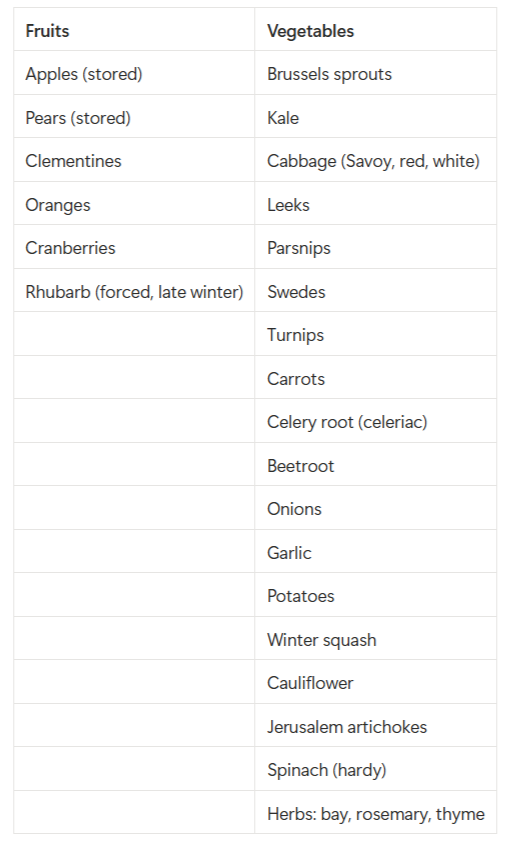
These are the foods that ground your energy and build resilience for the season ahead.
They also bring colour to grey days — the golden glow of squash, the deep greens of kale, the ruby hue of beetroot.
Warming Herbs and Spices
Herbs and spices are winter’s quiet medicine.
They warm the blood, support circulation, aid digestion, and lift the spirit.
Add to meals and teas:
Cinnamon, ginger, turmeric, cloves, cumin, black pepper, cardamom, rosemary, thyme, sage, and bay.
A pinch of warmth in your cooking can transform how your body feels.
How to Eat in Tune with Winter
Seasonal eating is about rhythm — matching your pace to the pace of the Earth.
In winter, that means slowing down. Nourishing rather than striving. Eating mindfully rather than rushing.
Here are some gentle ways to align with winter’s rhythm:
Cook from scratch when you can. It’s not about perfection — just the ritual of chopping, stirring, and tasting brings presence.
Eat mindfully. Create warmth at the table — candles, soups, silence, or soft music.
Practise gratitude. For stored harvests, for the Earth’s generosity, for the quiet time to replenish.
Batch cook. Prepare big pots of soups or grains that last several days — saving energy and bringing ease to the season.
Every act of nourishment becomes a quiet form of self-care.
Three Simple Winter Recipes
Here are three grounding, immune-supportive recipes to help you feel strong, warm, and steady this winter.
1. Miso + Mushroom Mineral Broth
Serves: 2–3
Ingredients:
1 tbsp olive oil
1 leek, sliced
2 garlic cloves, crushed (optional if tolerated)
250g mixed mushrooms (shiitake, chestnut, oyster)
1 tbsp grated ginger
1 tbsp miso paste
1 tbsp tamari or soy sauce
1 litre hot water or vegetable stock
Handful of kale or spinach
Optional: a strip of kombu or a few dried seaweed flakes
Method:
Sauté leek and ginger in olive oil until fragrant.
Add mushrooms and cook until softened.
Stir in miso and tamari, then pour in the hot water.
Simmer gently for 15–20 minutes.
Add greens at the end to wilt.
A deeply nourishing broth for the kidneys and immune system — perfect for winter mornings or as an evening tonic.
2. Roasted Root Vegetable Tray Bake with Rosemary + Lemon
Serves: 3–4
Ingredients:
2 parsnips
2 carrots
1 beetroot
1 small swede
2 tbsp olive oil
1 tbsp fresh rosemary
Zest of ½ lemon
Sea salt and pepper
Method:
Chop vegetables into equal chunks.
Toss with olive oil, rosemary, lemon zest, salt, and pepper.
Roast at 200°C for 40–45 minutes, turning halfway, until golden.
Simple, grounding, and aromatic — a celebration of the Earth’s roots and the warmth of home.
3. Creamy Spiced Porridge with Orange + Cranberries
Serves: 1–2
Ingredients:
½ cup oats
1 cup oat or almond milk
Zest of ½ orange
¼ tsp cinnamon
¼ tsp cardamom
1 tsp maple syrup
Handful of cranberries (fresh or dried, soaked)
Optional: chopped nuts or seeds to top
Method:
Gently simmer oats, milk, zest, and spices until thick and creamy.
Stir in maple syrup and cranberries.
Serve warm, topped with nuts or seeds.
A bright, comforting breakfast that nourishes warmth, creativity, and calm.
The Deeper Invitation of Winter
Winter invites you to listen — to your body, your needs, your inner wisdom.
It’s a time of stillness and gestation, when new dreams form quietly beneath the surface.
By eating seasonally, you align your nourishment with that rhythm of restoration.
You learn to trust that doing less — eating simply, resting deeply — is not a weakness, but a wisdom.
As you stir your soup, sip your tea, or light a candle at dusk, remember:
You are part of this rhythm. You are the Earth slowing down.
Every meal is a moment of reconnection. Every act of nourishment is a prayer for balanced
Winter is not a season to endure — it’s a season to savour.
It teaches us that life continues even in stillness, that nourishment can be quiet, and that our roots grow strongest in the dark.
Eating seasonally for winter means saying yes to that slower rhythm.
It means choosing food that feels like home — rich, warm, sustaining — and letting every bite remind you that this season, too, has its own abundance.
Because even when the Earth sleeps, she is still feeding us — and inviting us to do the same for ourselves.
xo Emily