Ease vs. Easy: How Seasonal Living Can Teach You Ease
We live in a world that worships easy.
Everywhere we look, we’re promised the next shortcut to success, the quick fix for discomfort, the one tool that will make life smoother, simpler, faster. We are sold a constant stream of “five-minute hacks,” “done-for-you systems,” and “instant transformations.” Our collective obsession with ease has been hijacked by the illusion of easy.
But here’s the truth — nothing worth having comes easily. It comes through time, devotion, presence, and practice. It comes through cycles of creation, destruction, rest, and renewal — through learning to hold ourselves with compassion when things take longer than we planned, when our path feels unclear, or when our growth doesn’t fit neatly into a linear timeline.
And yet, while effort and growth are part of the journey, they don’t have to feel like struggle.
There’s a profound difference between doing hard things and doing them with ease.
This is the art of the approach.
Our Culture’s Addiction to “Easy”
We live in an age that equates effort with inefficiency. The cultural narrative tends towards “there’s an app for that”, and we love to use AI, and technology to do the ‘hard’ stuff for us!
We’re told that if we were more productive, more organised, more in tune with the right system, everything would just flow effortlessly. But the pursuit of “easy” often leads us further away from flow.
Because “easy” is about avoidance — avoiding discomfort, avoiding time, avoiding depth.
It asks: How can I skip the middle?
The problem is, the middle is where life happens. It’s where we build resilience, character, and capacity. It’s where we grow roots.
When we chase easy, we miss out on the richness that comes from being fully present with the process. We trade true alignment for convenience. We trade wisdom for speed. We trade soul for surface.
“Easy” is the illusion of simplicity — the neatly packaged life that promises no friction. It is taking the well-trodden route, never trying or pushing out of your comfort zone, never trying the hard thing: But without friction, there’s no growth. Without tension, there’s no transformation. Without seasons, there’s no renewal.
Ease: The Presence of Flow
Ease, on the other hand, isn’t about eliminating effort.
It’s about meeting effort differently.
Ease is rooted in presence. It’s the moment you exhale after holding your breath, the softening that happens when you stop fighting the process and start trusting your capacity to move through it. Ease is the quiet confidence that you can hold what’s here, even when it’s uncomfortable — because you’ve built the inner structure to support yourself through it.
Ease says, I can do hard things.
And not only can I do them, but I can move through them with grace, rhythm, and self-trust.
In this way, ease is not passive. It’s deeply active. It requires awareness, alignment, and boundaries. It asks you to know your energy, to honour your needs, and to choose your pace — even when the world around you is moving fast.
Ease is cultivated through structure — through the systems and rhythms that hold you when life feels uncertain. It’s having tools that help you return to yourself. It’s surrounding yourself with the people, spaces, and habits that anchor you back into your body and your truth.
Ease is not the absence of effort, but the presence of flow.
The Seasonal Teachings of Ease
One of the most profound teachers of ease is Nature herself.
The Earth never rushes her cycles. She knows that everything unfolds in its own time — that every phase has purpose, every season its medicine.
Winter is not easy. It’s bare, slow, and still. It asks for surrender, rest, and reflection. But it carries an ease born of acceptance — of knowing that this is a sacred pause, not a failure to grow.
Spring is full of effort — seeds pushing through the soil, life bursting forth with energy. But even amidst this intensity, there’s an underlying ease in the process. The flowers don’t rush their bloom; they open when the conditions are right.
Summer holds a natural momentum, an ease in expression and abundance. But even here, there’s work — tending to the growth, maintaining the balance, harvesting with care.
And autumn, with her golden release, reminds us that letting go can be both hard and freeing. There’s effort in surrender, but also relief — an ease that comes from honouring what’s complete.
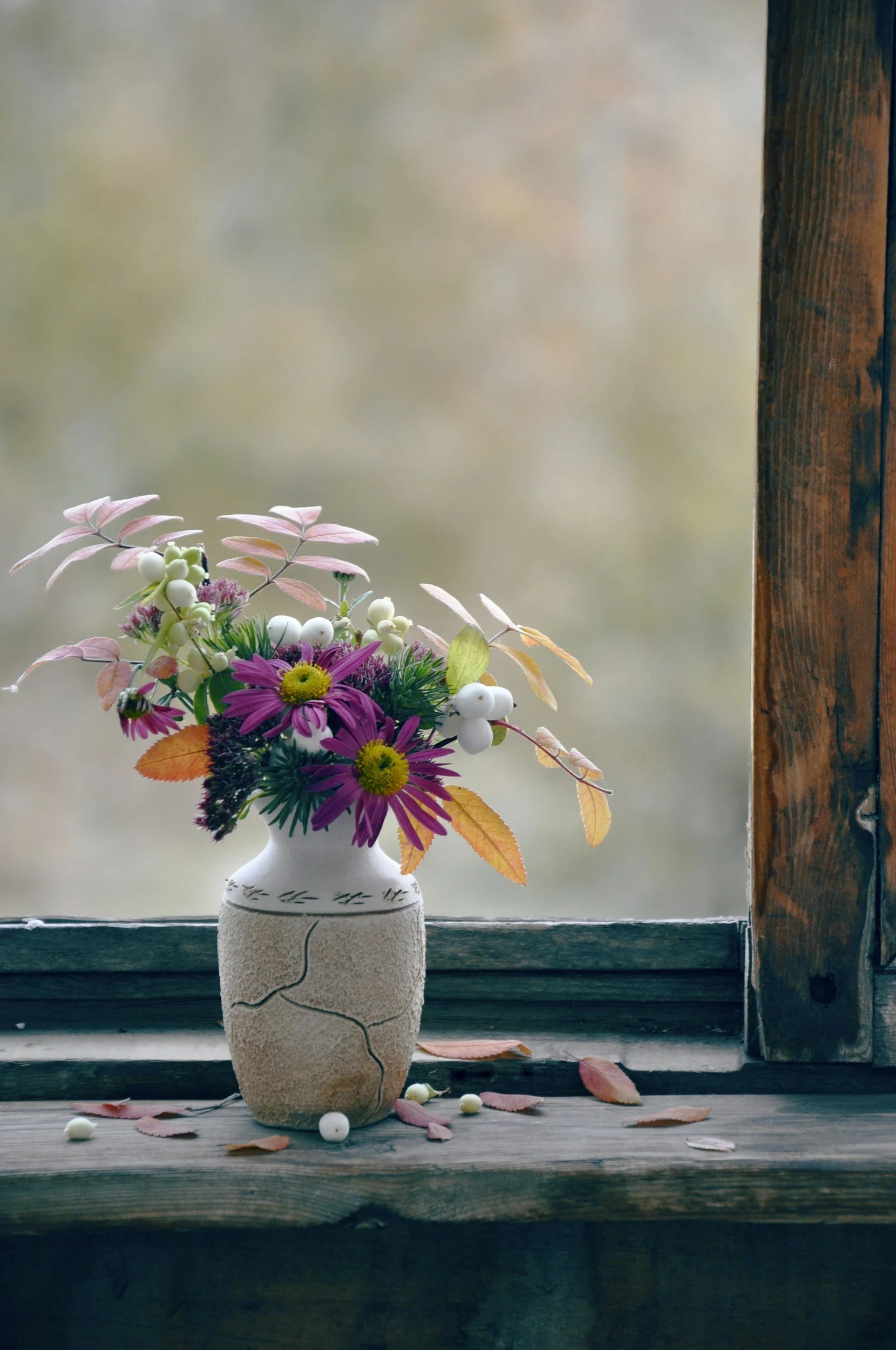
Seasonal living invites us to return to these natural rhythms within ourselves. It teaches us that we, too, are cyclical — that our energy waxes and wanes, our focus shifts, our needs change. And when we live in tune with these rhythms rather than against them, life begins to unfold with a quiet, grounded kind of ease.
We stop expecting perpetual summer. We stop forcing blooms when we’re meant to be rooting. We stop labelling effort as failure.
Instead, we learn to trust the pace of our own becoming.
So much of the difference between ease and easy comes down to approach.
When we approach our work, our healing, or our growth from a place of pressure, perfectionism, or fear, everything feels hard. We tighten. We resist. We push against the natural current of life.
But when we approach those same things with gentleness, trust, and flexibility, they begin to flow. The work doesn’t necessarily change — but we do.
Ease is what happens when we create safety within ourselves to face challenge without spiralling into overwhelm. It’s learning to approach difficulty not as a threat, but as an invitation — a chance to expand our capacity to hold, feel, and move through life.
The approach determines the experience.
Do we brace against the wave, or learn to ride it?
Tools, Systems, and Support: Building the Foundations of Ease
Ease isn’t something that just appears when life is calm. It’s something we build — intentionally and consistently, through the systems that support us and the tools that help us regulate, rest, and realign.
It’s the daily habits that ground your nervous system — your morning cup of tea, your breathwork practice, your time in nature, your journal, your boundaries, your moments of stillness. These are not luxuries; they are anchors.
Ease also lives in structure. The right systems — whether in your work, your home, or your creative process — can hold you when your energy dips or life feels chaotic. Think of structure as the soil that allows flow to flourish. It gives your creativity and emotional wellbeing something to root into, so that you don’t have to constantly rely on willpower to move forward.
And perhaps most importantly, ease is supported by connection.
The people who remind you that you don’t have to carry everything alone. The spaces that allow you to be honest about where you’re at. The mentors, friends, or communities who hold you through your seasons and reflect your strength back to you when you forget it yourself.
These supports are the scaffolding that allow you to meet life’s challenges with steadiness. They don’t remove effort — but they transform how effort feels. They turn survival into resilience, resistance into flow.
Because doing hard things with ease isn’t about bypassing discomfort; it’s about creating the inner and outer environment that allows you to move through it without losing yourself in the process.
Ease asks us to soften — not in weakness, but in trust.
To trust that we are capable.
To trust that things take time.
To trust that our worth isn’t measured by how fast or flawlessly we move through the world.
That’s often the hardest part — the emotional reorientation from control to surrender. When we’ve been conditioned to equate struggle with success, slowing down feels counterintuitive. Letting go feels unsafe. Rest feels like failure.
But ease lives in the body that exhales. In the nervous system that feels safe enough to pause. In the heart that’s open enough to receive.
Cultivating ease means learning to befriend discomfort — to stay with the in-between, the unknown, the process that’s still unfolding. It means allowing life to move through you rather than trying to force it into your expectations.
It’s emotional fluency. The ability to feel what you feel without getting lost in it. To know that emotion is movement — and movement is life.
You can begin to embody ease by aligning your approach with the seasons of your own energy — both literal and metaphorical.
In Winter, ease is found in rest. It’s the permission to slow down, to retreat, to nourish yourself without guilt. The ease of being rather than doing.
In Spring, ease is found in gentle initiation. Starting small, planting seeds, trusting that growth takes time.
In Summer, ease is found in flow — in leaning into momentum, celebration, and connection, but with balance.
In Autumn, ease is found in release. Letting go with grace, trusting that endings are not losses but part of the rhythm.
When we live this way — seasonally, rhythmically, intentionally — we learn to meet life’s cycles with presence instead of resistance. We no longer expect every season to feel light or abundant, yet we find ease in all of them.
Because ease doesn’t mean it’s simple. It means it’s right.
The Subtle Power of the Slow Approach
When we give ourselves permission to move slower, we make room for grace. We begin to experience the small miracles that happen in the pauses — the moments of reflection, recalibration, and realignment that allow life to feel less like a constant uphill climb and more like a gentle unfolding.
The slow approach invites us to be in relationship with what’s here, not constantly reaching for what’s next. It allows us to notice — the sunlight on the leaves, the satisfaction of small progress, the subtle ways our lives are already changing.
And in noticing, we return to presence.
And in presence, we find ease.
If you want to begin weaving more ease into your days, start by asking gentle questions:
Where am I forcing what wants to unfold naturally?
Where might I bring in more rhythm, structure, or support?
What tools or rituals help me feel grounded and resourced?
What would it look like to meet this challenge with more softness, not less strength?
Then, let your answers become your practice.
Ease isn’t found in doing less or trying harder — it’s found in meeting what is with a different kind of attention.
Additional Journal Prompts for Cultivating Ease
What does ease feel like in my body?
When do I feel most in flow, and what supports that feeling?
What areas of my life am I trying to make “easy” instead of learning to move through with ease?
What systems, rituals, or relationships help me feel grounded and supported?
What season of life am I in right now, and what kind of ease does it invite?
The difference between easy and ease is everything.
It’s the difference between escaping and evolving. Between avoidance and alignment. Between chasing perfection and allowing presence.
“Easy” will promise you comfort, but it won’t give you peace.
“Ease” will ask for your participation, but it will offer you freedom.
So this season, instead of asking for life to be easier — Ask to move through it with ease.
Because the magic is not in avoiding effort, It’s in learning how to meet it — with softness, with trust, and with soul.
xo Emily